

Attractions
Lee HouseWatersmeet to Countisbury
If you're looking for a walk that takes in some of the North Exmoor coastline as well as some spectacular inland views of the East Lyn Valley and the higher points of Exmoor then this might be for you.
Start from Lynmouth, up along the river to Watersmeet, veering off the path along Sparrows Walk, over the hills to Countisbury then down the coastal path to the harbour.
Hollerday House
Just behind Lee House is Hollerday Hill, famous for the grand old Hollerday House that used to sit near to the top until 1913 when the mansion was destroyed by fire.
At 800 feet or 240m above Lynmouth Bay it provides a beautiful backdrop to Lynton.
Lynton Cinema
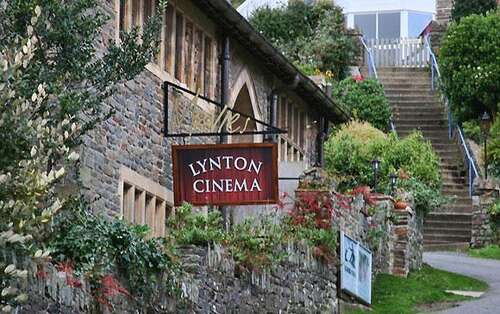
Lynton Cinema is open daily except Christmas Day. It has appoximately 70 seats with full Dolby digital projection equipment. Lynton is the smallest town in England to have a full time cinema. It is listed amongst the Top Ten best independent cinemas in the country.
The Vanilla Pod/Lynton
Our ethos is tasty, affordable and honest cooking, using the freshest ingredients. We rely on good local produce and unusual flavours and combinations, which is why The Vanilla Pod is popular with our regulars and all lovers of fabulous food. We cater for people with special dietary needs, with vegan and gluten free options for many dishes on the menu. Tel: 01598 753706.
Restaurant Kensington/Lynton
A celebration of local and seasonal produce is at the heart of Restaurant Kensington. With local Exmoor beef being at the forefront.
Facebook: Restaurant Kensington
info@restaurantkensington.co.uk
The Black Venus/Challacombe
Believed to be the only pub in England bearing this name, The Black Venus has been in the Birch family since 2004 and is now run by husband and wife team Darren & Sophie. You will see Darren both behind the bar and in kitchen whilst you will find Sophie outside in the kitchen garden growing produce for the pub. It is also Sophie's artwork that adorns the pub walls, The Black Venus Inn is a splendid old stone-built pub with wonderful food that enjoys an enviable location in Challacombe within the Exmoor National Park. The historic 16th century building is full of Devon character and charm with low ceiling and original beams. A warm welcome awaits…
The Old Bank/Lynton
Looking for the perfect spot to enjoy great food and even better company? The Old Bank is all about bringing friends together over delicious small plates, crafted with the freshest fish and coastal flavours, designed to spark conversation, laughter, and unforgettable moments, all in a relaxed, welcoming atmosphere.
Number 10/Lynton
Number 10
Offering delicious Italian dishes, pizzas, cocktails... open Tuesday to Saturday 5:00-10:00pm
The Oak Room/Lynton
The Oak Room is an award winning tapas restaurant. The owners have created a welcoming, cosy tapas bar and restaurant. Combining modern and traditional tapas dishes. Sourcing local ingredients wherever possible and importing only the finest produce from Spain. Complemented by some amazing Spanish wines and spirits.
The Blue Ball Inn, Countisbury
Dating back to the 13th century, with low ceilings, blackened beams, stone fireplaces and a timeless, unspoiled olde-worlde charm.
The Rising Sun/Lynmouth
The Greenhouse/Lynton
The Greenhouse is a cafe and restaurant located in Lynton and is a must-visit on any trip to Exmoor. Thought to have been built in the late 1800s, The Greenhouse has truly stood the test of time externally and is a real spectacle, with many original features still standing to this day.
The Ancient Mariner/Lynmouth
The Ancient Mariner. Regarded as one of Exmoor’s most unique bar and restaurants, it hosts an eclectic mix of maritime memorabilia – it’s the only pub that can boast a full size torpedo as well as an octopus sculpture made by a local artist. Our bar provides choices of both locally sourced spirits, ales, lagers and wines and international favourites. We are dog friendly, family friendly and free Wi-Fi for customers.
The Fox and Goose/Parracombe
All our dishes are prepared from ingredients sourced as locally as possible, such as our Devon caught fish and our Exmoor game, which means the menu varies with the seasons.
Kipscombe
Just along from Countisbury is Kipscombe, a beautiful walk with breathtaking scenery.
Snowdrop Walks at Marwood
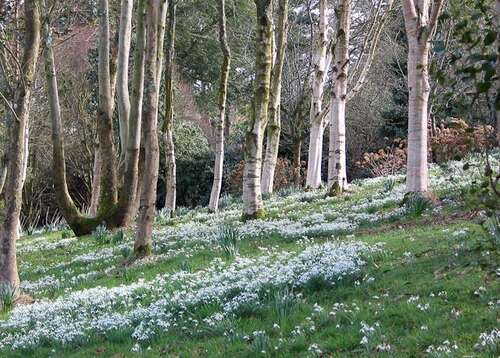
Snowdrop walks at Marwood
Half an hour from Lynton is one of our most favourite escapes - Marwood Gardens, a very special 20 acre private garden with lakes.
There's an impressive collection of plants, shrubs and trees, but above all, some wonderful views and a peaceful atmosphere.
In Spring the fields are covered with snowdrops too
Selworthy Green
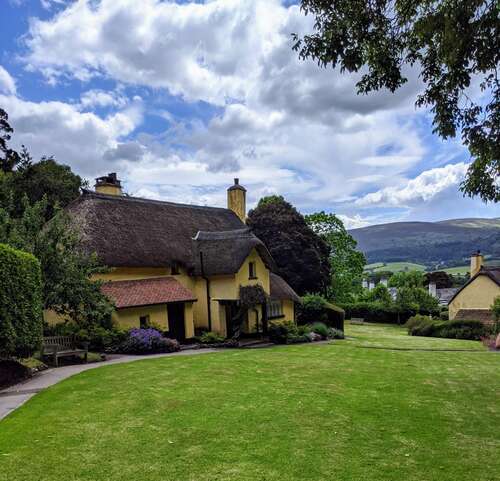
On the road between Porlock and Minehead, Selworthy is an approximate 25 minute drive along the coastal road from Lynton.
On the Holnicote Estate and owned by the National Trust, Selworthy has much to offer. A very picturesque little village, with walks from the car park, up through the woods to the coast and Selworthy Beacon, then back down the valley to the village.
The delightful Periwinkle Cottage Tea Room awaits you, offering homemade food and of course, Devon cream teas!
Watersmeet
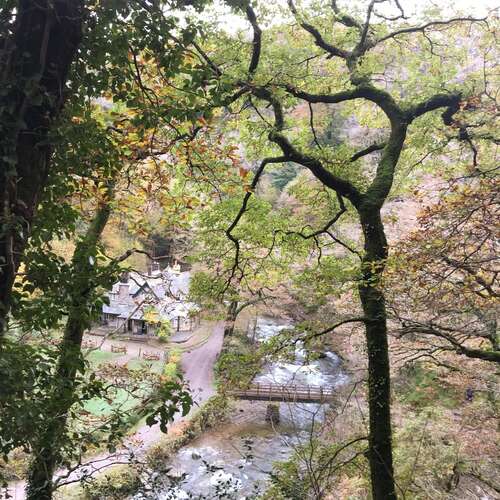
Take a stroll around the 2,000 acres of Watersmeet and Countisbury, a haven for wildlife with breathtaking views.
On Exmoor, Watersmeet is the meeting place of the East Lyn river and Hoar Oak Water.
Explore the rich woodlands of the Lyn Valley and stroll along the riverside at Lynmouth, Combe Park and Rockford.
As a contrast, the South West Coast Path runs along the dramatic Glenthorne Cliffs, towards Devon's most northerly outcrop, Foreland Point.
Watersmeet is part of the North Devon coast managed by the National Trust.
Arlington Court
Lynton & Lynmouth Cliff Railway
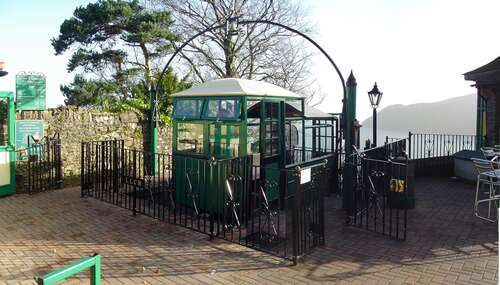
Devons famous Lynton and Lynmouth Funicular Cliff Railway is the most exciting way to travel between these two historic towns. Enjoy stunning views of the North Devon coastline as you ride the steepest totally water powered railway in the world. This historic Victorian railway opened in 1890, the 862 feet of track rises 500 feet with an impressive gradient of 57% providing stunning views across Lynmouth Bay. The railway is a fully working listed heritage monument and is the UKs only fully water powered railway and one of only 3 examples leftin the world
Dunster Castle - Dunster
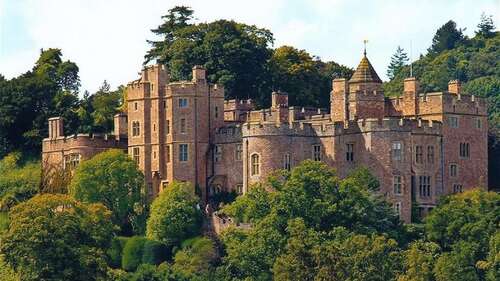
Dunster Castle dominates a steep hill overlooking the picturesque village of Dunster. The hill has been fortified since Saxon times, although nothing now remains of these early defences. During the early medieval period the sea reached the base of the hill offering a natural defence, and strong walls, towers, ramparts and outworks protected the other sides. In the late 14th century the castle came into the possession of the Luttrell family, and remained in their ownership for the next six hundred years. The house was modified and developed over the following centuries, and much of the current appearance dates from the 18th century when the park was landscaped and the Green Court, terraced grounds and follies were created. Much of the furniture in the house also dates from this period.


